
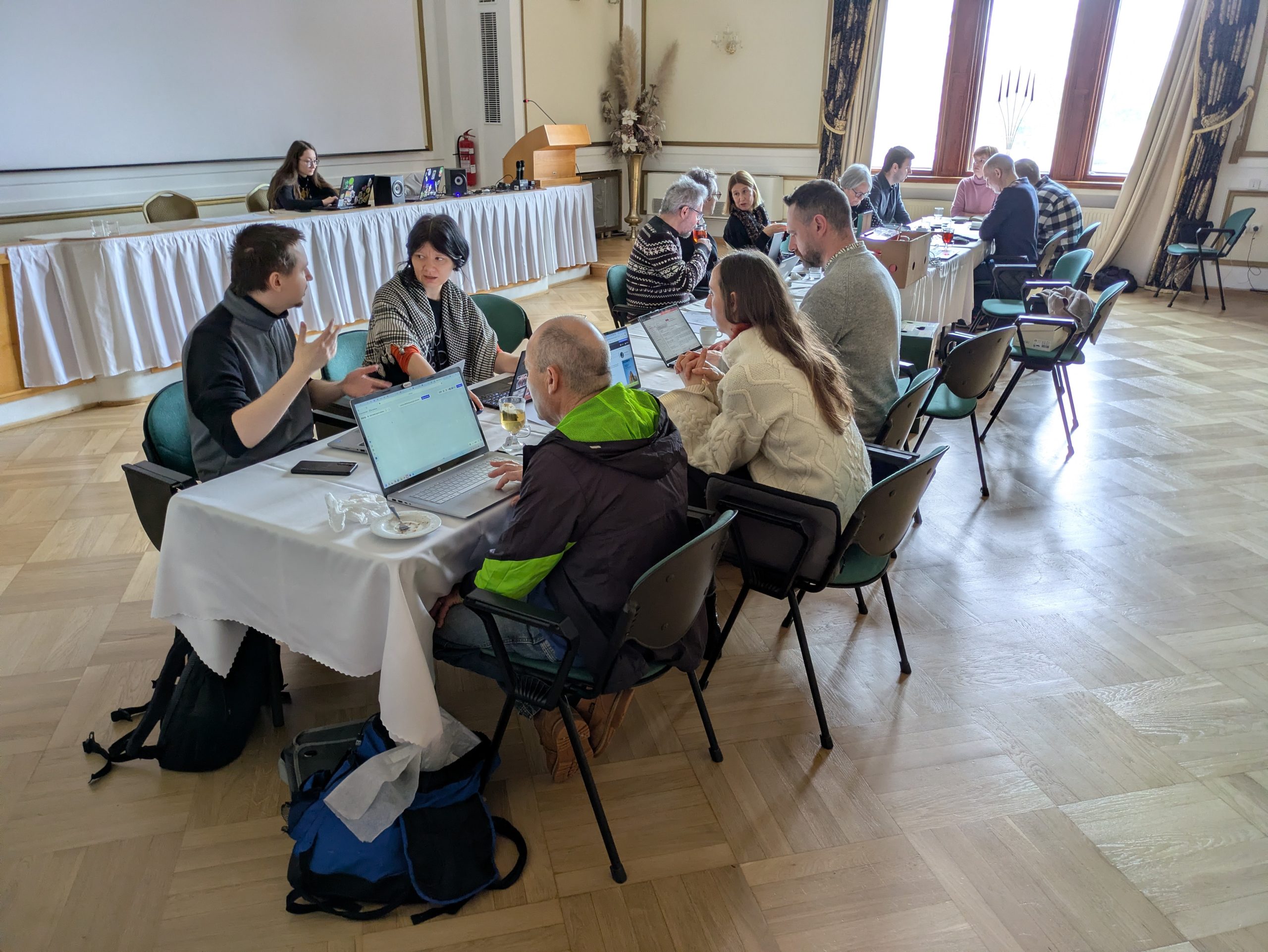
The GRADE workshop in Smolenice brings together researchers, practitioners, and cultural heritage specialists to reflect on the geographical, temporal, and legal transformations of creative media. Across two intensive days, the event will explore how games, software, and multimedia art have circulated, been regulated, and preserved within shifting European contexts.
At the core of the workshop is a dialogue between theory and practice. Keynote lectures will be paired with hands-on sessions that address three interconnected strands of the GRADE research agenda:
the homogenisation of copyright law in Europe (T2.4, D2.4),
the East/West media transfers hybrid exhibition, focusing on circulation and translation across political and cultural boundaries (T2.2, D2.2, T3.5, D3.5), and
best practices in the preservation of cultural heritage, with particular attention to digital and media-based forms (T3.4, D3.4).
Day 1: Copyright, Circulation, and Context
The first day will open with a keynote lecture examining the historical development of copyright law in Europe and its evolving enforcement practices. This will be followed by parallel sessions hosted by WG1, WG2, and WG3, offering multiple perspectives on how legal frameworks have shaped creative production, distribution, and reuse across different regions and periods.
Day 2: Preserving the Born-Digital
Day two will begin with a forward-looking keynote on the future of preserving intangible, born-digital cultural heritage—from software and games to experimental multimedia art. Parallel working group sessions will continue throughout the day, deepening discussions on methodological, legal, and archival challenges.
The workshop will conclude with a round-table discussion aimed at articulating synergies across the themes explored. In particular, the discussion will focus on:
East/West media transfers and how they have been reshaped by the homogenisation of copyright law across European jurisdictions;
Periods of media history that should be prioritised for preservation, especially those preceding copyright harmonisation;
Creative computing heritage as a catalyst for new grassroots practices, community-led initiatives, and alternative media cultures.
Image: Smolenice (Zrúcaniny Smolenického hradu) by Lántz, Jozef Anton – Slovak national gallery, Slovakia – Public Domain.